
Everyone claims they have their own style. But if you trace any outfit back far enough, you’ll find an influence behind it. A celebrity, a TV character, a trend cycle, an older sibling, Personal style doesn’t appear out of nowhere, it’s taught, observed, borrowed, and slowly reshaped into something that feels like our own.
Fashion is often framed as a measure of originality. Who started a trend, who copied it, who did it better. But the truth is that style rarely exists in a vacuum. Every aesthetic, every silhouette, every “new” trend is usually a reinterpretation of something that came before it. Criticizing people for following trends ignores a simple reality: everyone has been influenced by someone or something at some point. True originality in fashion is rare.
In recent years especially, the industry has leaned heavily on nostalgia, revisiting and remixing aesthetics from the late 1990s and early 2000s. The current obsession with Y2K fashion is a perfect example. That era produced a very specific cultural image: the rise of the celebrity socialite, the glamour of early reality television, and the maximalism of pop culture style. Figures like Paris Hilton popularized velour tracksuits and hyper-feminine casualwear, silhouettes that are everywhere now through modern athleisure lines such as those from Kim Kardashian’s brand Skims or Jayda Cheaves Waydamin brand.
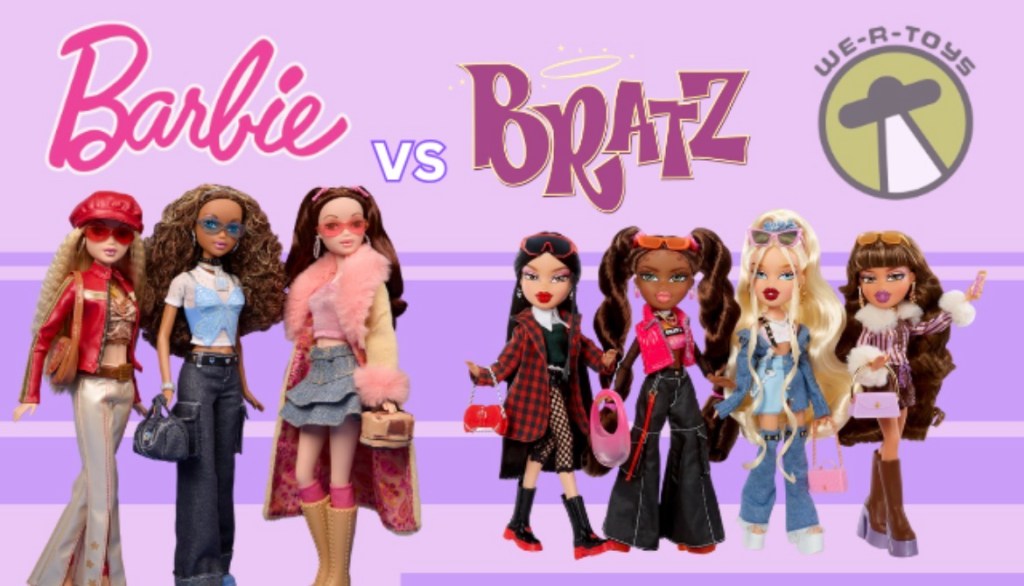
But fashion influence doesn’t only come from celebrities or runways. For many people, the foundation of their personal style begins much earlier through childhood media, toys, and television. Characters and aesthetics absorbed during formative years often leave a lasting imprint. For some, it might have been the exaggerated proportions and playful attitude of Bratz dolls. For others, it was the expressive, experimental outfits seen on shows like That’s So Raven. Even fictional characters with darker aesthetics like gothic, alternative, or rebellious have shaped how young viewers imagine themselves presenting to the world.
Where does our sense of fashion truly come from?
You are not that original. Is your personal style shaped by icons you watched growing up? Is it a form of communication, a visual language that expresses who we are or how we want to be perceived? Or is it simply the accumulation of taste, memories, and references collected throughout our lives? In reality, it is usually a combination of all three. Personal style often forms at the intersection of internal identity and external influence. The environments we move through like schools, cities, media, and social circles all introduce visual ideas that we either adopt, reinterpret, or reject.
For example, I remember becoming fascinated with platform shoes in middle school. My school had both a middle school and high school wing, many of the girls on the high school side wore creepers or chunky platform Converse. To someone younger, they seemed effortlessly cool. I became obsessed with the look, and that fascination never really left. Moments like that illustrate how style can begin with admiration. Sometimes what starts as imitation gradually becomes integrated into our own identity.
Ultimately, the challenge of personal style is learning to distinguish what genuinely resonates with you from what simply surrounds you. Trends will always cycle in and out, nostalgia will continue to resurface, and cultural icons will keep shaping aesthetics. The real question is how we filter those influences into something that feels authentic. Personal style, then, may not be entirely original. But when it reflects the experiences, memories, and choices that shape a person, it becomes uniquely theirs.
